
On the Boards: On the Rocks
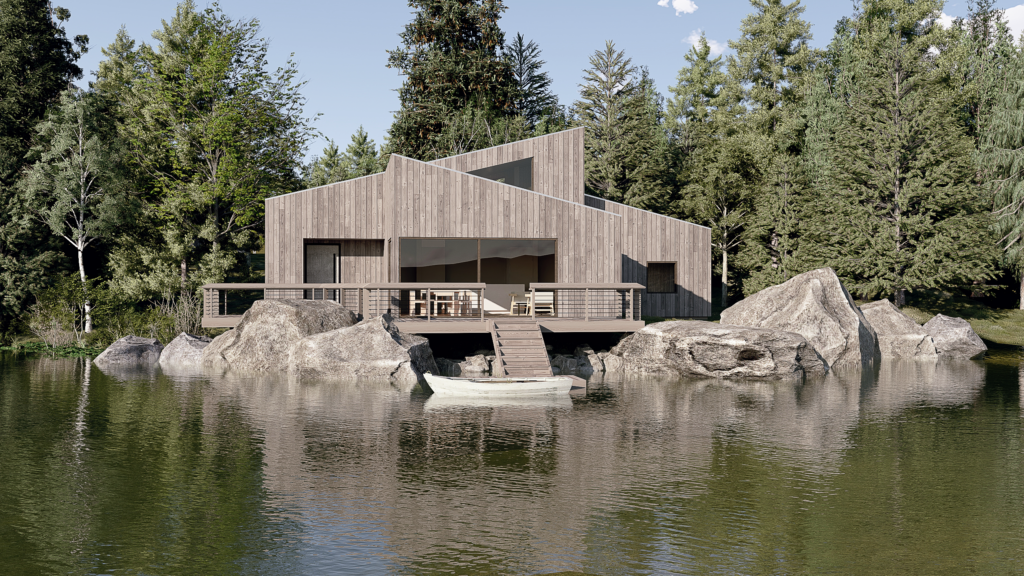
Uniquely sited on the lake’s edge, this shoreland-zone-regulated camp maintains the governed footprint while transforming the language of the structure into a collection of volumes, reflecting the granite boulders that pepper the waterfront site. Breaking the form of the main volume creates a sleeping loft with acoustic separation and views out to the water while simultaneously adapting to a site-appropriate scale. On the upper portion of the site, a two-bedroom bunkhouse provides additional accommodations for... December, 2025
Resilient by Design: OPAL Wins California Passive House Challenge
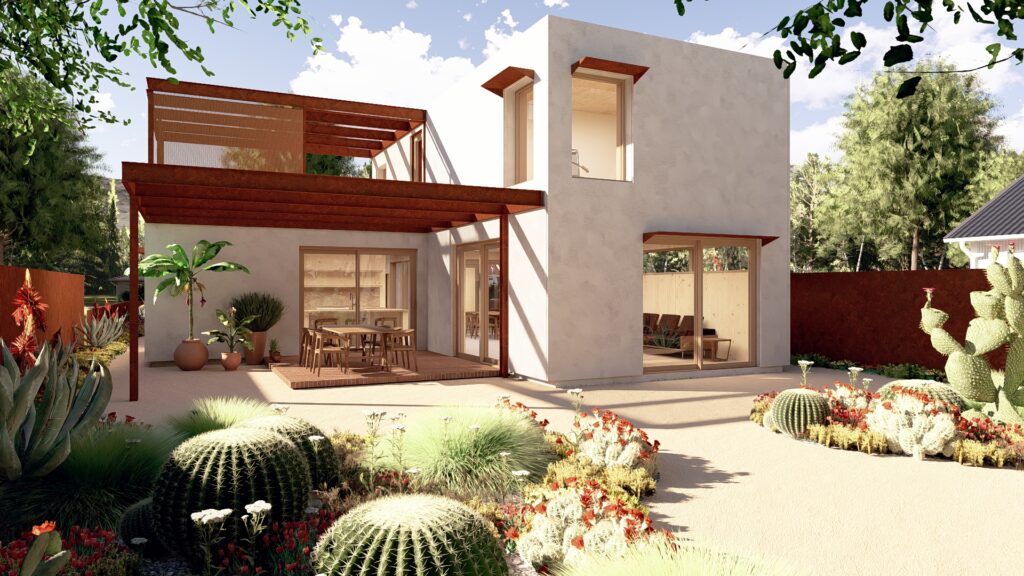
OPAL has been awarded first prize in the Contemporary category of the California Rebuilds Design Competition, hosted by Passive House Network and Passive House California. The competition underscored the urgent need, and tremendous opportunity, to advance high-performance, fire-resilient housing in communities impacted by our changing climate. Our design responds directly to the destruction wrought by recent wildfires in Los Angeles. This residence is a compact, replicable model that is optimized for rapid deployment. It is... December, 2025
The Results Are In, and Maine Is Crushing It
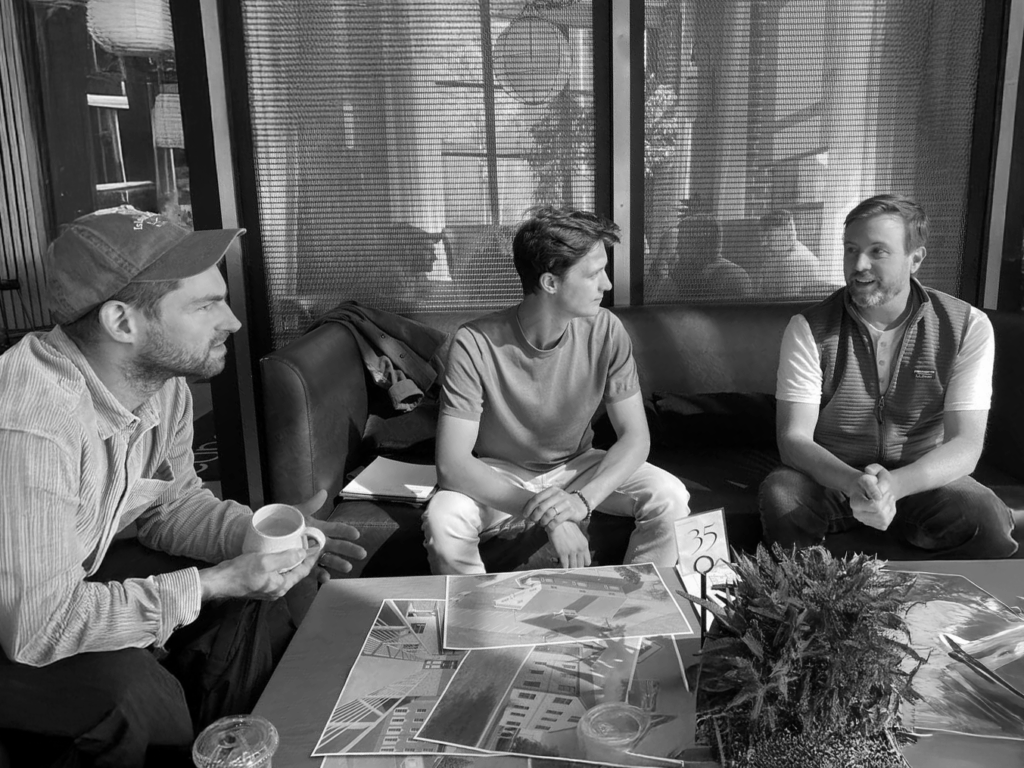
by Timothy Lock Photo by AIA Maine Each year, the AIA issues its 2030 Commitment By the Numbers report, tracking progress toward the Architecture industry’s goal of operational carbon-neutral buildings by 2030. This year, of 460 reporting signatories, 27 firms nationwide reported achieving the current 2030 target of an average portfolio energy reduction of 80% over national baseline averages. We’re proud to share that, for the sixth straight year, OPAL was once again among them.... October, 2025
On the Boards: Camp Revamp
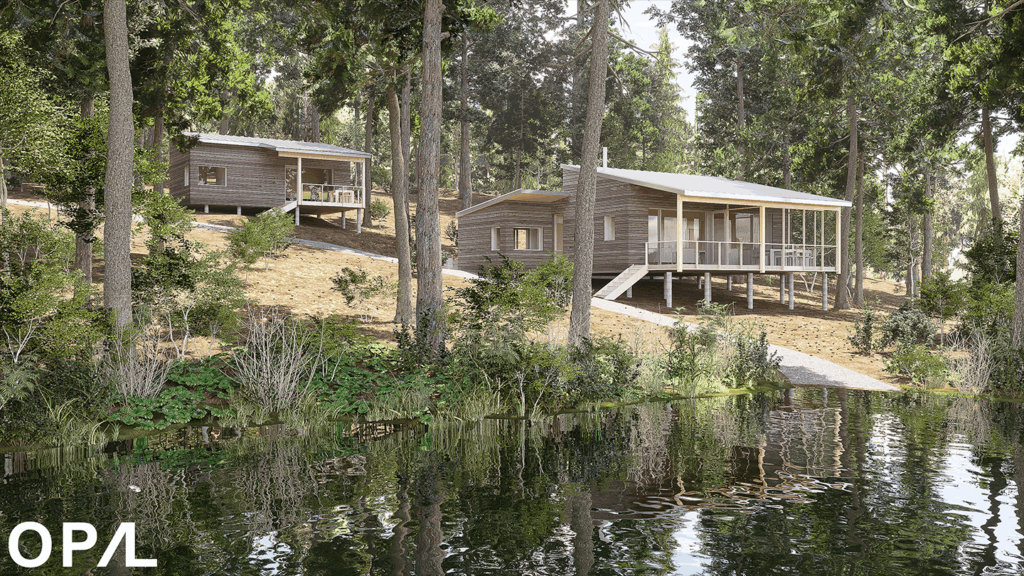
Over the years, OPAL has become well-versed in designing within Maine’s Shoreland Zone, which regulates structures located along the coast and lakefronts. Working on existing, non-conforming structures in the restrictive Shoreland Zone necessitates creative, problem-solving design. Too much intervention requires relocating the structure outside of the setback, so we often find ourselves walking the line between preserving the existing and modifying with new. The adaptive reuse of existing structures lessens impact on the site and... September, 2025
Island Projects, Revisited
Over the years, OPAL has completed a number of projects in the Penobscot Bay. Because of the remote nature of these projects, many members of the staff hadn’t yet had the opportunity to see these sites in person—until now! Due for an office retreat, we got out of the studio and onto the water to see the islands and celebrate summer in Maine. First stop: Hurricane Island OPAL began working with the Hurricane Island Foundation... August, 2025
Nice Shorts!
by Timothy Lock For some reason, designers have a hard time thinking about envelopes holistically. While we’ve made real progress in the average energy performance of new construction, I still see the same recurring mistake: focusing on individual wins rather than an integrated design approach. Just yesterday, walking past a construction site, I saw a mock-up of an exterior wall that included an imported high-performance window. I was initially excited—this wasn’t a project I would... June, 2025

No More Fried Eggs
by Timothy Lock Building orientation has always been a critical part of ecological design. Even ancient and pre-civilization structures show evidence of careful siting—responding to sun, wind, slope, or seasonal migration patterns. Orientation could enhance comfort, ensure safety, or even reflect cultural hierarchies. In contemporary practice, however, orientation is often constrained by pre-existing conditions: zoning ordinances that govern setbacks and encroachments, street grids drawn decades (or centuries) ago, and institutional design guidelines that prioritize form... May, 2025

Great Design is Regenerative Design
by Timothy Lock “Regenerative design” is having a moment. It’s the new aspirational label in architecture and planning circles, showing up in panel titles, consultant pitches, and design awards. It’s urgent. It’s abundant. It’s…very poorly-defined. What’s troubling isn’t the idea of ecological renewal. It’s that “regenerative” is being used to rebrand practices that many architects have already been advancing for years, without needing a new vocabulary or an outside consultant to explain it. Often,... May, 2025


All Wood, All the Time Receives Thermory Design Award
We are pleased to announce that our lakeside Connecticut project “All-Wood, All the Time” has won the Tiny & Private House Category of the Thermory Design Awards! With a cross-laminated structural system and wood fiber-based products making up all of the above-grade insulation, it only made sense to use a wood product for the exterior finish on this project. Our design team chose to incorporate the thermally treated Ash cladding product from Thermory Benchmark for... December, 2022

All Wood, All the Time Receives Honor Award
Double awards this year! Our All Wood, All the Time project was also selected for an AIA Maine Honor Award. This lakefront residence in Connecticut capitalizes on the carbon-sequestering nature of wood to minimize its carbon footprint. With a cross-laminated structural system and wood fiber-based products making up all of the above-grade insulation, this approach to building uses the most sustainable resource we have to its full potential. The single-level design concentrates the living spaces... May, 2022

AIA Maine Honor Award for Davis Center for Human Ecology
We are thrilled to announce the selection of the College of the Atlantic’s Davis Center for Human Ecology as a recipient of an AIA Maine Honor Award for excellence in architecture. We are proud of this collaboration with Susan T Rodriguez Architecture to produce an academic building on the leading edge of building ecology. This approach radically reduces the lifecycle carbon footprint and effectively neutralizes the environmental impact of its construction, while enhancing program and... May, 2022

Part One: Why Sustainability Won’t Be Enough
More than a buzzword, an ideal, or a solution, sustainability is simply a concept of maintaining. It implies stasis, without movement forward or back, in an effort to maintain the status quo. While it has its merits when applied to the challenge of climate change, solely being sustainable in our practices and lifestyle doesn’t move the needle forward, which is an imperative today. We don’t find ourselves at a distance from the effects of global... May, 2022

Matt O’Malia Interviewed in Maine Home + Design and Architecture, Design & Photography
OPAL founder and principal architect Matt O’Malia recently sat for two interviews, with Maine Home + Design magazine and the Architecture, Design & Photography podcast. There was a lot to catch up on. The pandemic of 2020-21 has dramatically shifted our clients’ priorities, the business environment in which we operate, and the ways in which OPAL responds to both. Both conversations reflect Matt’s deep consideration of these matters—starting long before the pandemic—and the opportunities... April, 2021
Forbes Magazine Interviews Matt O’Malia
Forbes Magazine Interviews Matt O’Malia Forbes magazine has published an extensive interview with Matt O’Malia, in which the OPAL founder and executive partner explains how his work at the intersection of building performance and the architectural experience led to his co-founding, with Dr. Joshua Henry, the wood fiber insulation manufacturing company GO Lab. Speaking with Forbes contributor and housing industry author Sheri Koones, Matt describes recognizing years ago the contradiction inherent in reducing buildings’ carbon... December, 2020
