

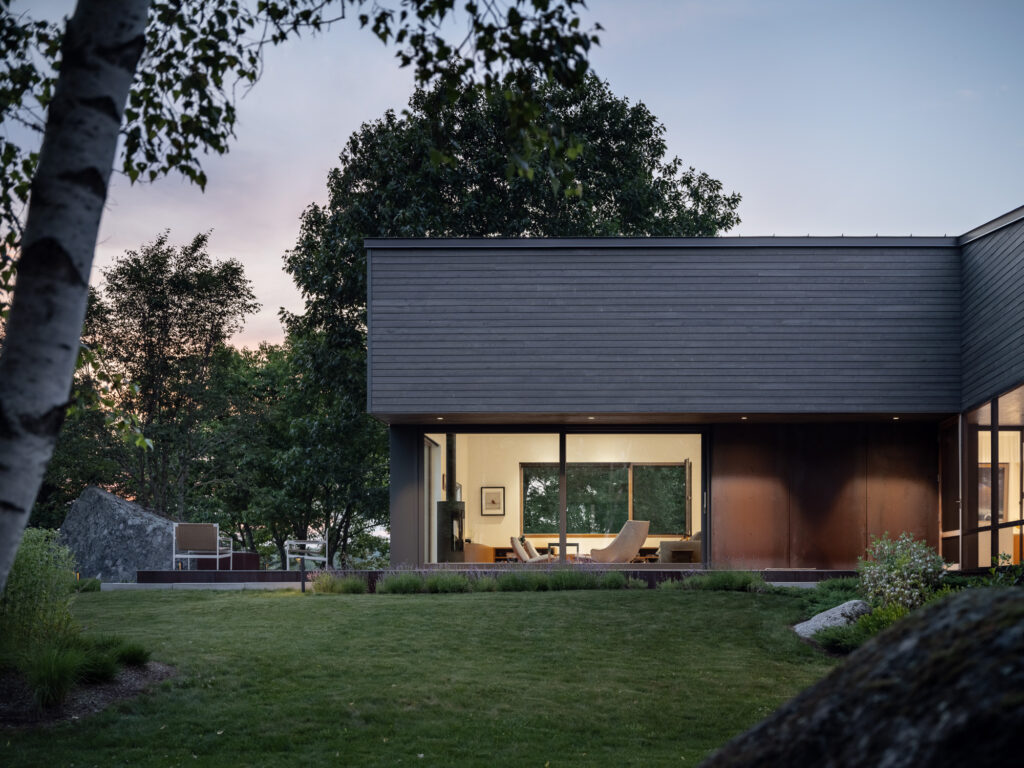
Riverbend
Amazing Amazing Architecture
“Riverbend is a residence situated at the end of a quiet lane on a bend of the Bagaduce River. The home rests atop a low ridge to capture views up and down the river…
The home is built with a Passive House approach to the building shell with high levels of biogenic insulation, air-sealing, triple-glazed European windows and doors, and heat recovery ventilation. Areas of glazing are sized and placed carefully based on orientation and to capture views…
A dark exterior palette of stained eastern white cedar and Corten steel panels contrasts with a bright interior palette of white oak casework and flooring.”
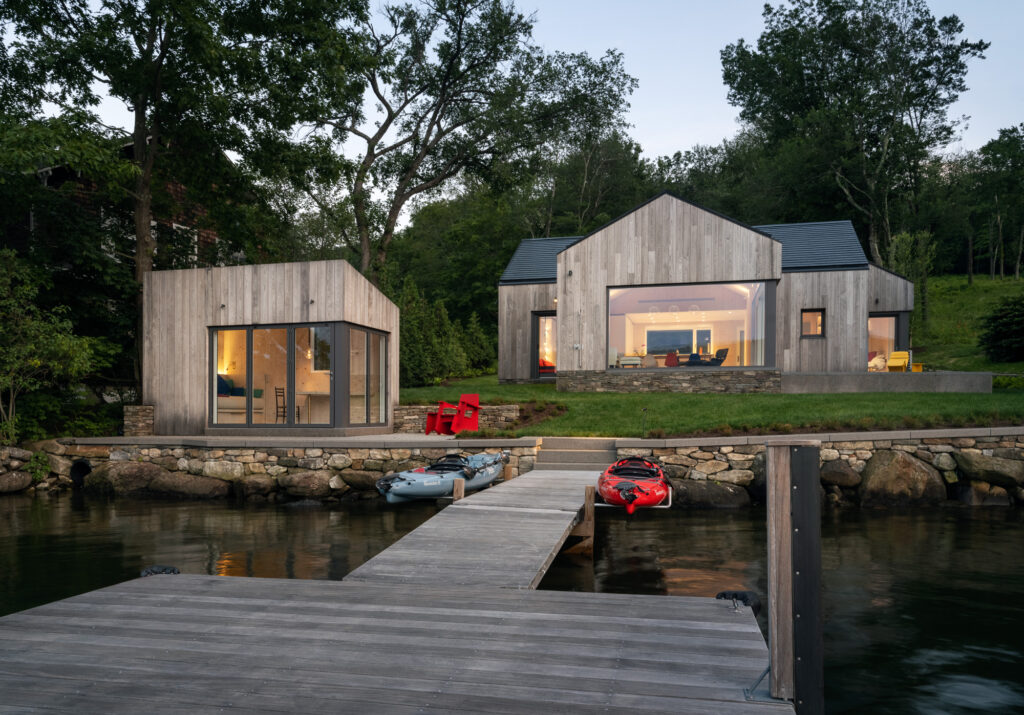
All-Wood, All the Time
Architecture Lab
“All-Wood, All the Time…demonstrates a high-performance timber strategy through full use of cross-laminated timber and wood fiber insulation. Completed in 2021, the 1,300 ft² home replaces a seasonal cottage and responds to strict site constraints with a single-level layout.
Prefabricated solid wood panels, exposed interior finishes, and integrated solar systems support Passive House energy goals and low carbon impact, reinforcing OPAL’s commitment to renewable material applications in residential architecture.”

Nice Shorts!
OPAL Ecology Blog
A high-performance window doesn’t make a high-performance envelope. If we wouldn’t wear a winter coat with shorts and call it weatherproof, why design buildings that way? Holistic thinking means matching systems and materials so they actually work together.
New blog post by OPAL Partner Timothy Lock on how building envelopes shouldn’t be dressed like teenage boys in winter.
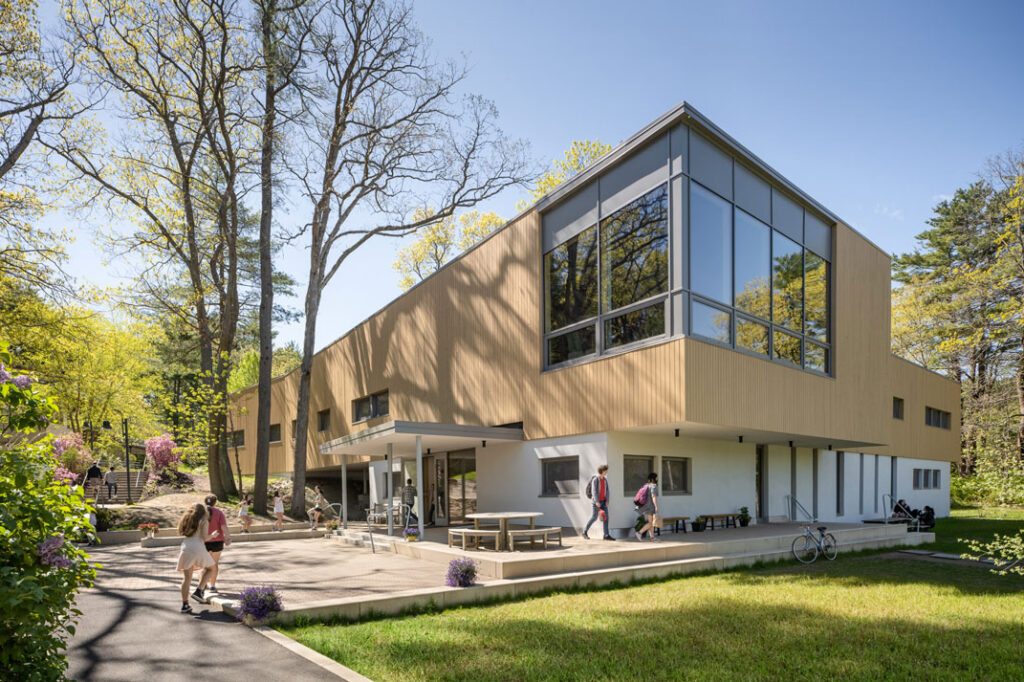
The Bridge Seamlessly Integrates into its Natural Surroundings
Education Snapshots
“OPAL’s The Bridge at Waring School in Beverly, Massachusetts, seamlessly integrates modern design with its natural surroundings, enhancing accessibility while fostering community through innovative educational spaces and sustainable principles.”
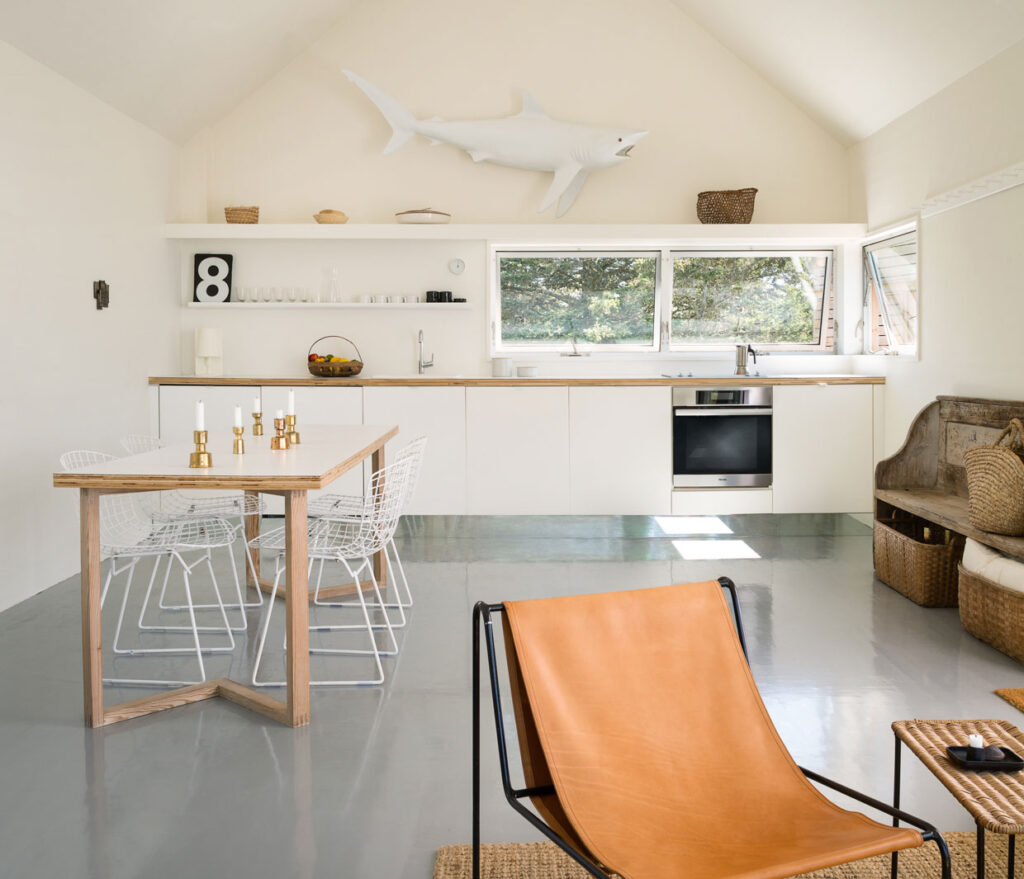
Little House on the Ferry: A Maine Retreat Forged from Rock and Refinement
The Coolector
“For those who dream of a perfect escape where wild beauty meets architectural brilliance, Little House on the Ferry by OPAL Architects is a design worth delving into. Tucked away on a rugged island off the coast of rural Maine – a place steeped in tales of fishing, farming, and granite quarrying – this isn’t just a guest residence; it’s a masterclass in blending modern design with a wild, untamed spirit. Its owners, primarily based in Austria, sought a tranquil summer escape for visiting family and friends, and what they found was a former granite quarry – a site that beautifully marries seaside idyll with the haunting grandeur of a post-industrial ruin.”
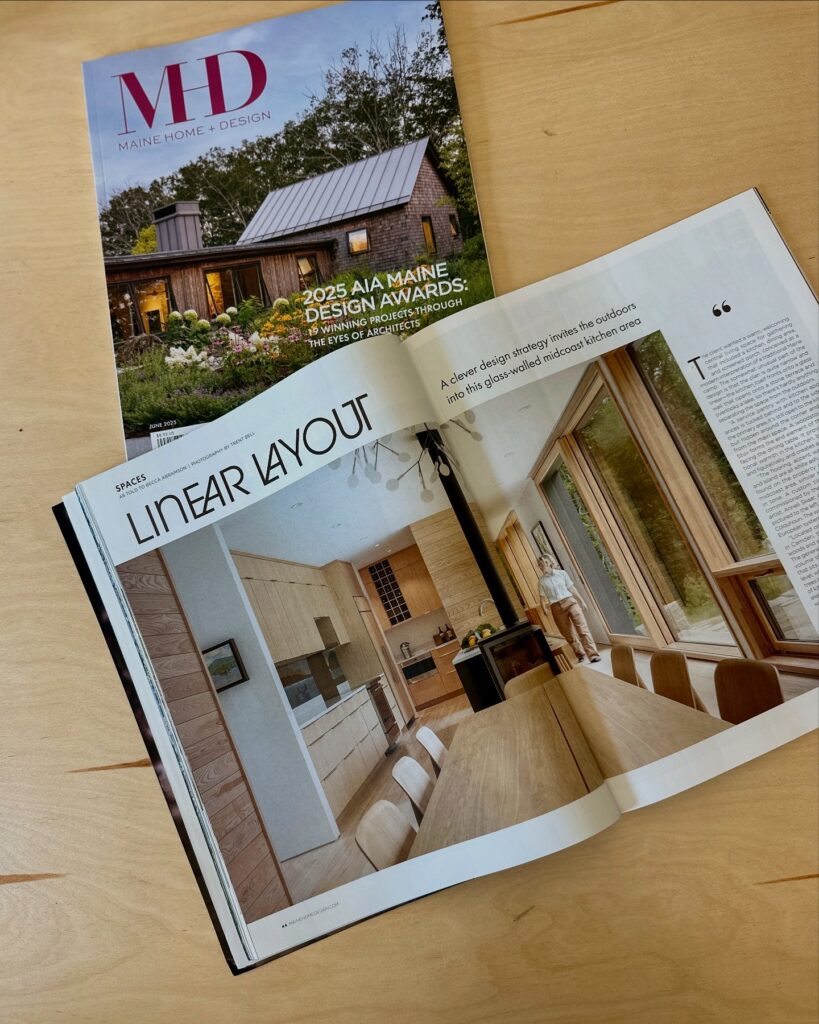
A Narrow Midcoast Kitchen That Invites the Outdoors In
Maine Home + Design
“The client wanted a warm, welcoming central living space for gathering that included a kitchen, dining area, and screened porch, conceived as a modern interpretation of a traditional Maine camp. The somewhat unusual part of the design is that the plan is quite narrow and linear—the kitchen itself fronts onto a glass wall that opens onto a stone terrace and overlooks a lake, so there’s hardly anything separating the space from the outdoors.”
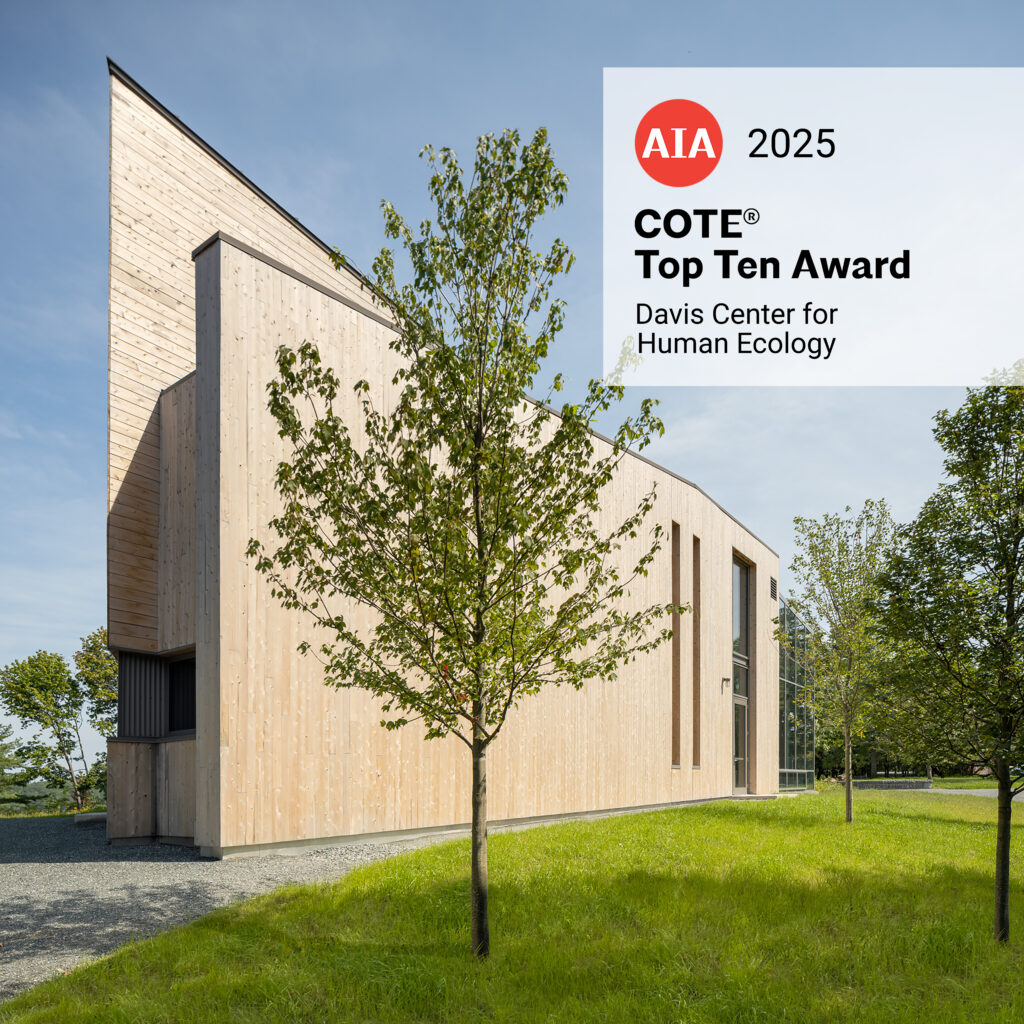
COA Davis Center Honored with AIA COTE Top Ten Award
The Architect’s Newspaper
“The Davis Center for Human Ecology reinforces a heightened awareness of the unique ecology of the site and surrounding island community. Weaving together the interdisciplinary study of Human Ecology with Passive House standards and biogenic materials, the building forms a dynamic new academic environment that amplifies an immersive and sustainable learning experience at the intersection of land and sea. The college’s first purpose-built academic building since its founding in 1969, the Center is a tangible expression of the school’s mission and commitment to environmental stewardship demonstrating a high standard of energy performance and a unique interpretation of the regional context.”“
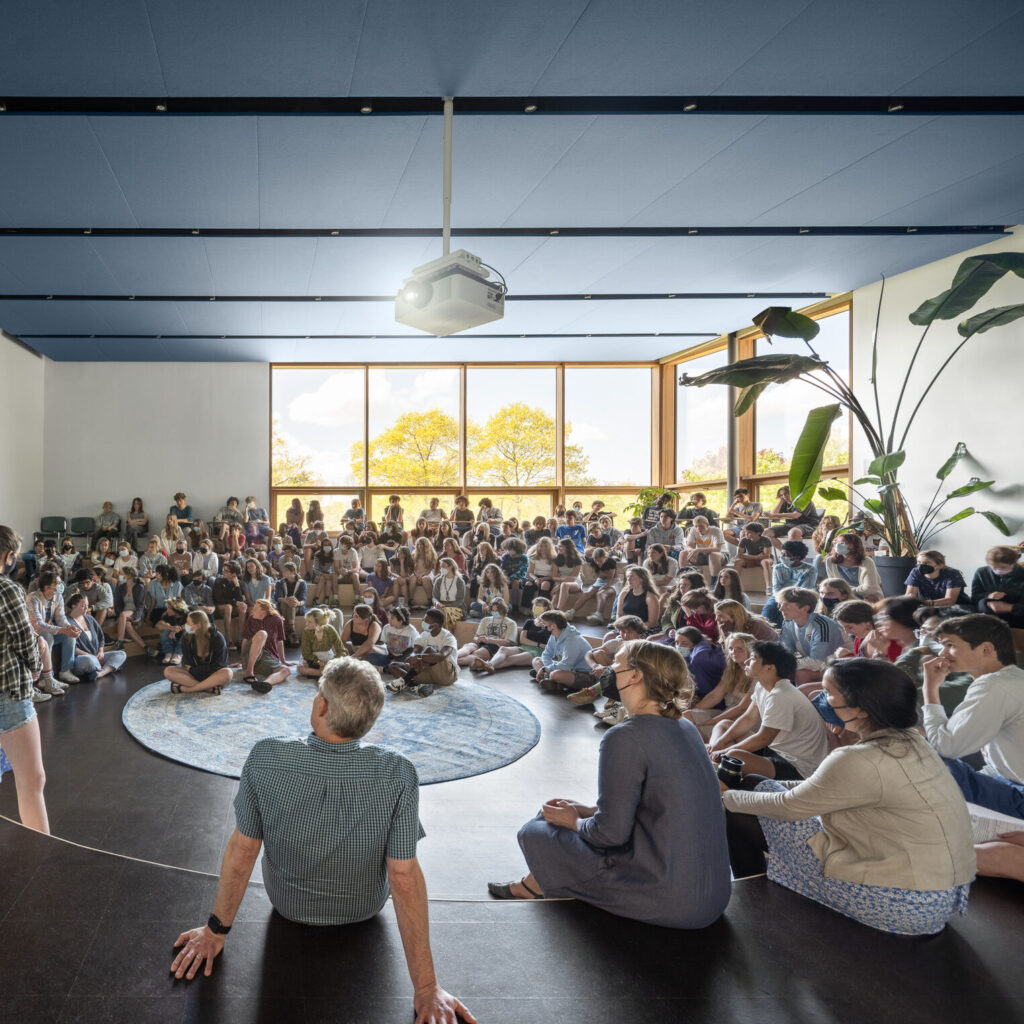
The Bridge at Waring School
Rethinking The Future
As the primary entry point for the school’s 150 students, the facility houses classrooms, areas for independent study and small-group collaboration, and a versatile forum classroom designed around the All-School Meeting—a daily tradition since the school’s founding in 1972.
Designed to meet Passive House standards for energy efficiency and occupant wellness, the building also resolves longstanding campus challenges related to circulation and the environment. It replaces a former residential structure that was prone to flooding and lacked accessibility.
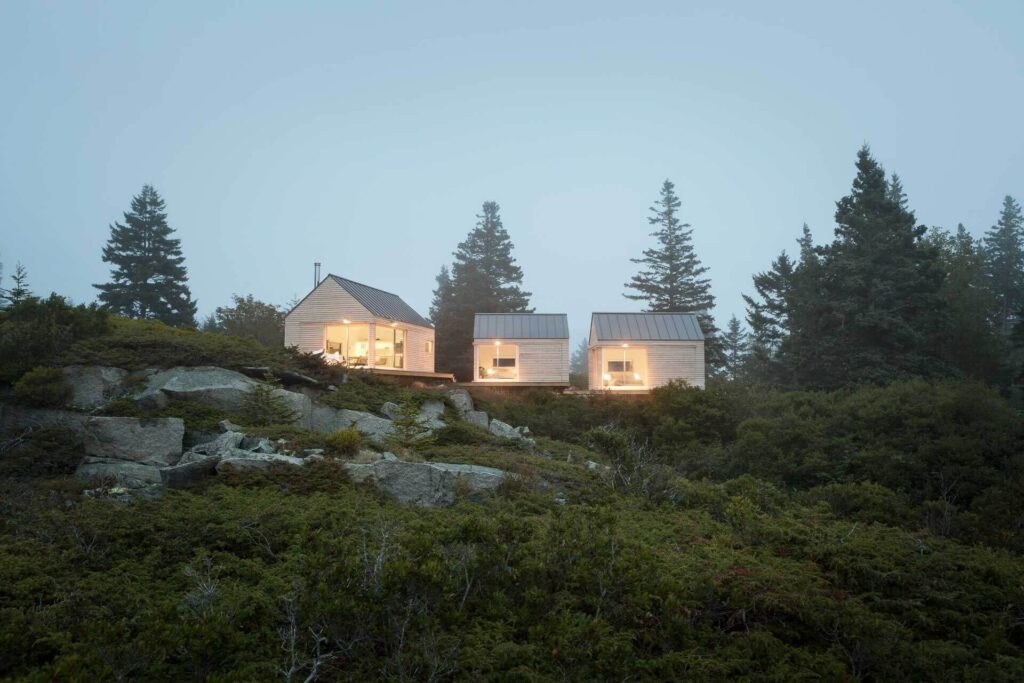
OPAL’s Prefab CLT Cabins Float Gently over Quarry in Rural Maine
Design Boom
“Tucked within the weathered coastline of rural Maine, OPAL Architecture’s Little House on the Ferry sidesteps the typical image of a single homestead set against a picturesque view. The project takes shape with three modest, prefabricated structures, nearly matching, positioned just so among the remnants of a former granite quarry. At first glance, the cabins appear to rest gently on the site, yet their placement reveals a more deliberate reading of place. Each sits in conversation with the stone around it, recognizing both the industrial past and the ongoing resilience of the recovering ground.”

No More Fried Eggs
OPAL Ecology Blog
OPAL Blog Post from Timothy Lock on holistic integration of building orientation in modern design; balancing ecosystems, energy logic and building reuse.
“Building orientation is often the first physical decision made by the architect, the most final, and, potentially, the most resilient. It sets in motion a cascade of impacts–on the soil, vegetation, water cycles, and non-human species that share the site. We must treat orientation as a defining ecological act.”
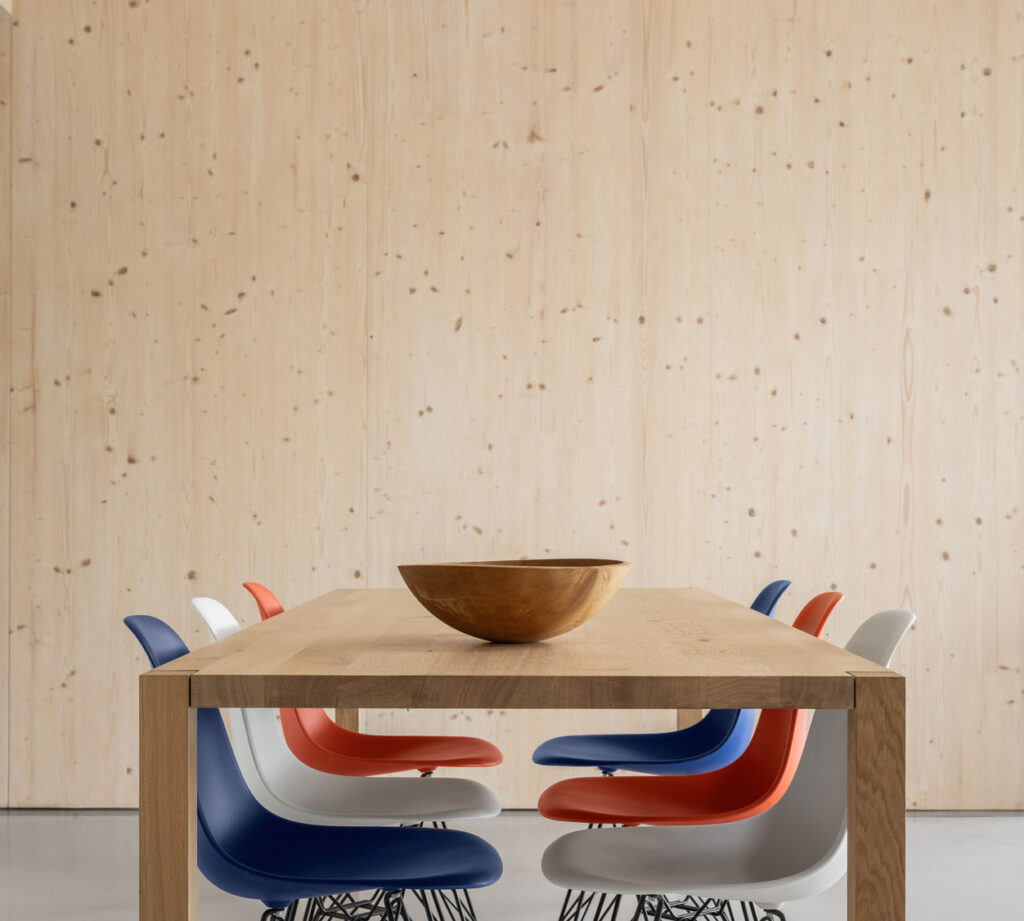
OPAL Crafts an All-Wood Lakefront Marvel in Connecticut
Plain Magazine
The project “All Wood, All the Time” is a lakefront residence in northwestern Connecticut—an innovative home designed and built using wood, “the most sustainable building material we have,” according to studio OPAL who led the project.
The environmental benefits of using wood are substantial. It naturally sequesters carbon throughout its lifespan and requires only solar energy to produce itself, which dramatically reduces the building’s carbon footprint. Utilizing cross-laminated timber (CLT) for its structural system and wood fiber-based products for insulation, the entire home represents environmentally conscious building.

Great Design is Regenerative Design
OPAL Ecology Blog
“Regenerative design” is having a moment. It’s the new aspirational label in architecture and planning circles, showing up in panel titles, consultant pitches, and design awards. It’s urgent. It’s abundant. It’s…very poorly-defined.
What’s troubling isn’t the idea of ecological renewal. It’s that “regenerative” is being used to rebrand practices that many architects have already been advancing for years, without needing a new vocabulary or an outside consultant to explain it. Often, the people promoting “regeneration” are not the ones designing or building anything at all.

How Do Conservation Experts Make Their Own Homes More Energy Efficient?
The Wall Street Journal
Featuring OPAL’s Timothy Lock residence using the sun for heat in Maine.
“When my wife, Holly McBride—a textile designer—and I designed and built our home in Hope, Maine, in 2015, our goal was to maximize efficiency in energy and material use, creating open, modern spaces heated primarily by the northern Maine sun.
The goal was challenging because Maine’s far northern latitude limits the length of daylight in the winter, but it was achievable with passive house design, which requires reducing energy demand by over 80% compared with standard construction.”

Adeline Thompson Interviews Timothy Lock
Where the Climate Things Are Podcast
Timothy Lock joins Adeline Thompson to share his journey growing up on the coast of Maine, falling in love with the outdoors and eventually becoming an architect focused on ecological design. He discusses his deep connection to nature, shaped by his experiences in Acadia National Park, and how these moments influenced his commitment to climate action.

A Pair of Landscape Designers Pursue the Wild Life
Architectural Digest
A unifying spirit flows through Charbrook, the rural Massachusetts homestead, workspace, and design lab of Lauren and Stephen Stimson, married partners behind landscape architecture firm Stimson.
When the couple acquired the property, they focused on sensitively reclaiming the land from overgrowth and invasive species, but drew no master plan, preferring to let things evolve organically. Since then, they’ve added a grange hall and a studio (designed by OPAL) that accommodates on-site colleagues.

How Residential Design Offers Opportunities for Sustainability
AIA Architect
Timothy Lock and Gabe Tomasulo from OPAL wrote about how sustainable home projects can directly benefit both homeowners and architects.
“While large-scale commercial and institutional projects tend to garner top sustainability honors, more humble single-family residential designs remain one of the most consistent project types for architects practicing in the United States.”

OPAL makes Top 200 Residential Architects List
Forbes
“We present to you an architects list unprecedented in its scope and diligence, representing firms in 42 states plus the District of Columbia. These are the nation’s finest practitioners of the creation of “home,” and the residential specialists best suited to help you build the setting for your life’s most meaningful experiences—all vetted and at your fingertips.”
Richard Olsen, Forbes, October 30, 2024

Biogenics and Less
Context Magazine
“With realities of climate change bearing down on humanity, all disciplines and human practices have been forced to face their individual impacts. This is often done through exhaustive assessment of data, number crunching, and then ultimately comparison to conventional ways of doing things, in an effort to prioritize positive climate action. There is nothing wrong or inaccurate in this approach. However, what are we to do when any essential generalization would yield a very basic result across all human activities? We simply need to use less stuff.”

Framing Coastal Views
Maine Home + Design
Sited on a grassy promontory overlooking the ocean, this home blends in with the topography, maintaining a low profile in the landscape. Resting atop a linear knoll that stretches toward the water, the single-story coastal structure’s roof forms follow the slope’s profile. The house is divided into two main volumes linked by a glass connector that, upon approach, frames a view through the building, down the landscape, and out to the water beyond.
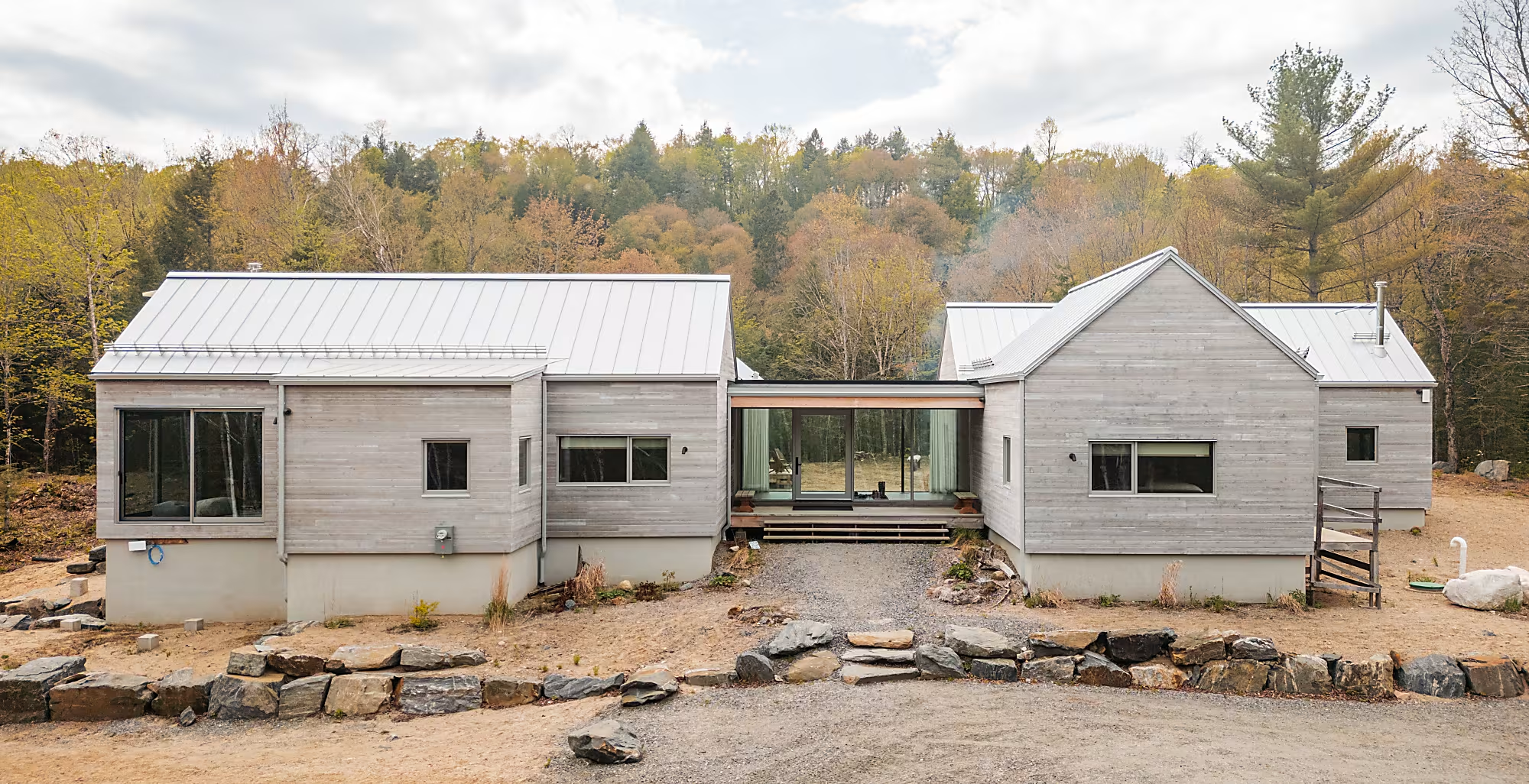
OPAL designed 1,000-Acre Wilderness Retreat featured in WSJ
The Wall Street Journal
Best friends Neil Cuggy and Jonathan Ferrari are the founders and CEOs of Goodfood, Canada’s largest meal kit company (a north-of-the-border version of HelloFresh). The two men, both 36, live a block from each other in Montreal’s Westmount neighborhood. They drive the same cars (Volvo XC60s year-round, plus Porsche 911s in summer), eat the same foods and have the same philosophy and hobbies. “We love being on the cusp of health and personal growth trends,” Ferrari says. As Cuggy explains, only half kidding, “We try to minimize decision-making by applying the same choices to both of us.”
Excerpt from Fred A. Bernstein at the Wall Street Journal, Image by Oliver Parini

COA Dedicates New Student Residence
The Collins House, a new, 46-bed, ecologically designed residence hall on College of the Atlantic campus, was officially dedicated to outgoing president Dr. Darron Collins ‘92 and his family at an on-site ceremony June 9.
COA Board of Directors Chair Beth Gardiner was joined at the speaker’s podium by donors Andrew and Kate Davis, architect Timothy Lock of OPAL Architecture, and Collins himself. Scores of trustees, staff, faculty, and friends of the college gathered for the event.
photo credit: College of the Atlantic

Ecology Centre in Coastal Maine is “Model of Holistic Sustainability”
Dezeen
Located in the town of Bar Harbor, the Davis Center for Human Ecology is located on the main, 38-acre (15-hectare) campus of the College of the Atlantic (COA).
Founded in 1969, COA is a small private college dedicated to exploring the relationships between humans and their environments.
The centre is the first purpose-built, academic facility to be constructed on campus since the college was established.

OPAL Honored with AIA National Architecture Award
AIA Architect
The Davis Center for Human Ecology at College of the Atlantic in Bar Harbor has received the AIA National Architecture Award – the highest level of recognition possible for a specific project from the American Institute of Architects.
Timothy Lock, OPAL Management Partner, emphasized the significance of this National Award: “We are thrilled to be acknowledged for a project so dear to our heart and for a client so uniquely identified with Maine. The building represents a new milestone for what is possible within the context of ecological building design, and will set a new benchmark both within our practice, and now with this acknowledgement, across the country. Academic buildings, particularly those with labs, tend to be thought of as energy hogs that cannot be avoided, and this is anything but. Additionally, this is a huge moment for Maine architecture and design, for this project to be recognized at this level. Moreover, I am so grateful for our collaborative partnership with Susan Rodrgiuez; Susie and I have a very special working relationship that is evident in the seamless weaving of the cutting-edge design and sustainability seen in this project, and I am happy others have seen it too.”

What is a ‘Zero Emissions’ Building? Belfast Firm Consults with White House on the Answer
Maine Biz
Timothy Lock, a management partner at Belfast design firm OPAL, was part of a team that provided support and guidance to the White House Climate Policy Office to set a newly proposed “zero emissions” standard for environmentally responsible buildings in the U.S..
There is currently no uniform, holistic definition for zero emissions buildings in the U.S., according to Lock.
The definition proposed building design that is highly energy-efficient, free of on-site emissions from energy use, and powered solely by clean energy sources (directly or through market mechanisms).

A Building Design Framework that Promises Minimal Energy Use
Maine Biz
“When you take the wood fiber insulation and the cross-laminated timber, you’re talking about an all-wood construction which is renewable, recyclable and carbon storing with a negative carbon footprint when we build that building,” said Matt O’Malia, Opal’s executive partner.

A Building Design Framework that Promises Minimal Energy Use
Camp Business
“Shelter is the physical manifestation of a person’s unique ecological condition—a direct interface with nature, and perhaps nowhere is this gradient more abrupt than at camp. The buildings become indelible reminders of this interplay to the campers who use them, and can become the primary nostalgic touchpoint years later. Whether it is the place one etched a name, or the banner hung in the dining hall, or a specific bench around a fire ring—these spaces hold a primary role in how “camp” is remembered. Many of these memories center around beautiful, old, rustic buildings. While many historic camps have equally historic structures, how does the next generation of camp buildings carry on this tradition, and, more importantly, how do we seize the opportunity to enhance that ecology?”
Camp Business Magazine Article by Timothy Lock

Essential Questions to Ask Your Architect
Redfin
Question # 19: How can we make my project more environmentally friendly?
“Harmful climate impacts are driven disproportionately by building construction and operation, including up to 40% of total CO2 emissions globally. Architects occupy a position of influence within the construction industry, driving material flows and modeling innovative best practices,” notes OPAL. “With this comes responsibility and an opportunity to collaborate with builders, material manufacturers, and others to seek impactful climate solutions. It’s important to ask your architect about their environmental approach, including design decisions about operational efficiency, embodied carbon, responsible product specifications, habitat considerations onsite, limiting water use, and the design of healthy interior environments for occupants.”

Penobscot Bay’s newest marine research station opens on Hurricane Island
PenBay Pilot
“On Aug. 5, more than 100 attendees gathered on Hurricane Island to join in a Ribbon Cutting Ceremony for Maine’s newest field research station, a carbon-negative facility for marine science on Penobscot Bay and one of two offshore research stations in the Gulf of Maine.
Governor Janet Mills and Maine Congresswoman Chellie Pingree were joined in the ribbon cutting celebration by Hurricane Island Center for Science and Board Chair Bill Harwood, University of Maine marine biologists Bob Steneck and Rick Wahle, architect Matt O’Malia, Hurricane Island Founder Peter Willauer, Hurricane Island Executive Director Bo Hoppin, and Research Director Anya Hopple.”

A Low-Carbon, All Electric Build
Fine HomeBuilding
“Wedged between a public road and private lakeshore in rural Connecticut, this all-electric house is proof of concept for the team behind Maine-based OPAL Architecture. It was the firm’s first time combining cross-laminated timber (CLT) structural sheathing with wood-fiberboard insulation and a Tesla solar-tile roof. Integrating those products and systems was a tall and rare order that company founder Matthew O’Malia and his team were excited to fill.”
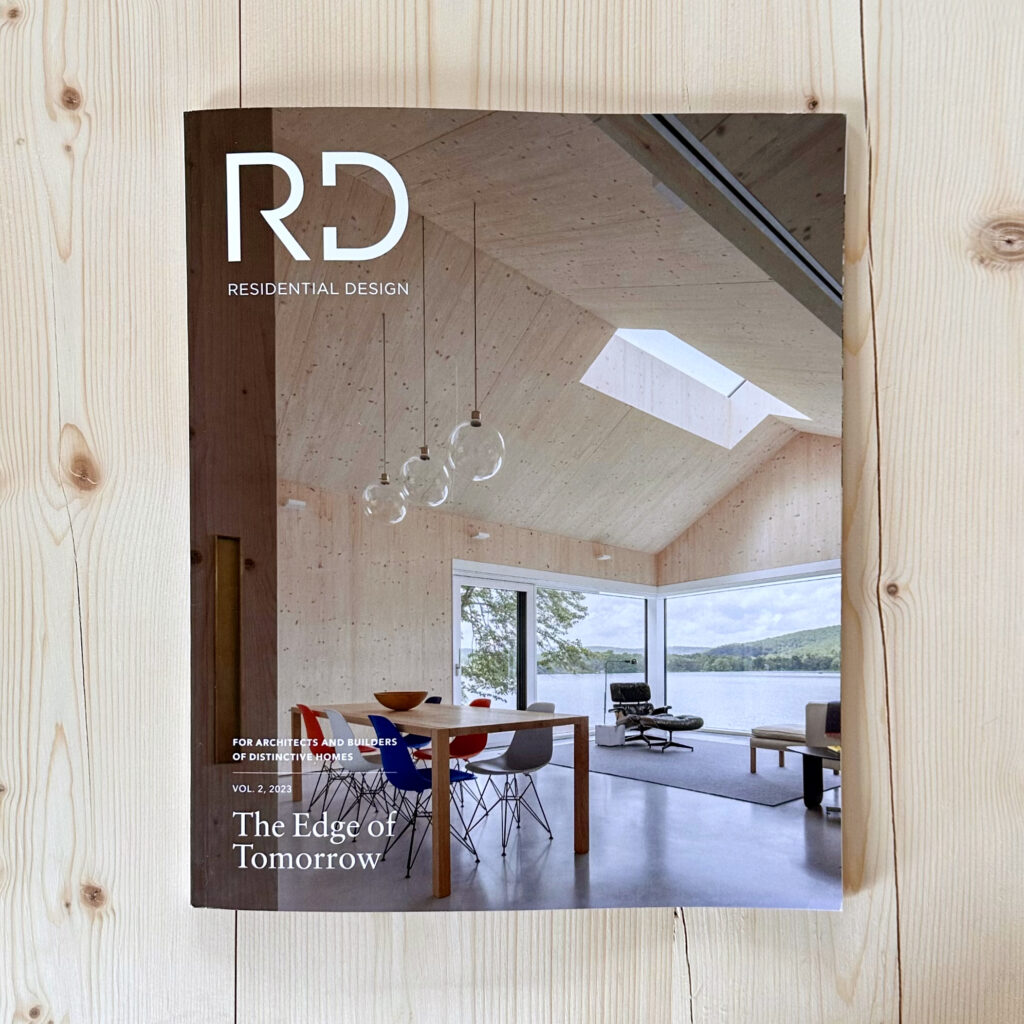
The Edge of Tomorrow
Residential Design Magazine
“For this lakeside vacation home in rural Connecticut, the central argument and the answer to all the questions is wood—the ultimate renewable, recyclable material. That it happens to be intrinsically beautiful and durable is a lovely benefit, of course, but more critically, it also stores carbon—helping anything built with it to attain net-zero goals. When OPAL decided to construct this house almost entirely of wood products and name it “All-Wood, All the Time,” it was a siren song and a battle cry at the same time.”
Benefits of Simple Building Forms
Green Building Advisor
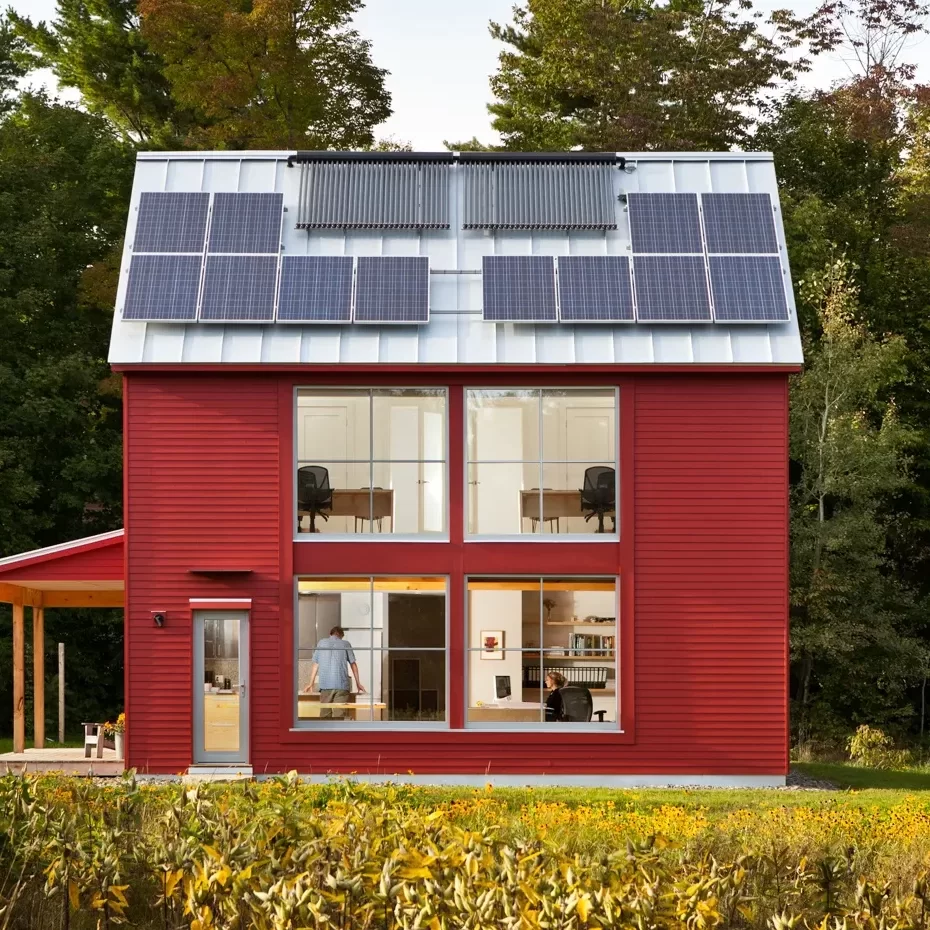
“The embodied carbon associated with a building refers to the greenhouse gases emitted during the manufacturing of products and materials used to construct it. These emissions differ from those generated during the building’s operations i.e., operational emissions. As our buildings become more energy efficient, the portion of emissions that comes from embodied carbon becomes a more glaring piece of the greenhouse gas emissions pie. Embodied carbon happens before a building is even constructed, so I and many others refer to it as “upfront carbon emissions.””
Green Building Advisor & Fine HomeBuilding Magazine Article by Lloyd Alter

OPAL Architecture’s Home to Last
Decor Maine
“A couple moving to Maine wanted an efficient single-floor living space, so they turned to OPAL Architecture. Follow a long winding road, turn up a steep driveway in Rockport, and there lies the result. It is indeed compact and efficient, and the footprint of the home was designed in four quadrants. The most challenging aspect proved to be fitting in a garage without falling prey to the design faux pas of American architecture’s past. Yet, a recessed garage door integrates the space into the entry, effectively masking it with the color and material treatment. Call it a chameleon space—one that blends into the rest of the home. The other closed-in sections of the house include the bedrooms and bathrooms. Balanced by open sections, the circulation through the entry to the kitchen leads to the deck and landscape. This flow pattern encourages connection between spaces and an environmental link between the indoors and outdoors.”

Timothy Lock Interview on Stretching Passive House
Passive House Network
In order to facilitate a broad adoption of the Passive House standard as a governor for design, projects that attempt to achieve the standard, without compromising user programming or architectural design excellence, become natural bellwethers for new frontiers of what is achievable within the framework. The Waring New School, in Beverly Massachusetts, represents one such opportunity. On the verge of certification under PHI, this 13,000 square foot middle-and-high school classroom building achieves the Passive House standard, while addressing a broad range of client program and site ecology and accessibility requirements. It is an example for how Passive House can be used as a didactic agent of change and stretch Passive House objectives beyond energy use alone.

College of the Atlantic Feature
Architectural Record
“Bar Harbor is the busiest venue on Maine’s idyllic Mount Desert Island, known for its 31,000-acre Acadia National Park and for the island’s history as a summer colony for the Rockefellers, Astors, and Vanderbilts. While the village of Bar Harbor teems in the summer with tourists crowding T-shirt shops and ice cream parlors, calmer enclaves exist outside the village, such as the 38-acre College of the Atlantic (COA) on Frenchman Bay. For this small private undergraduate institution, Susan T. Rodriguez | Architecture • Design of New York collaborated with OPAL Architecture of Belfast, Maine, to create a crisply tailored, sustainable, 28,000-square-foot, two-story classroom building. The polished result, dedicated in September, meets remarkably high standards of sustainability with a design distinction often missing in energy-efficient efforts.”

Warren Woods Ecological Field Station
Passive House Plus
“Set on the edge of a state park with over 300 acres of old growth forest, the University of Chicago’s Warren Woods ecological field station was the first passive certified building of its type in North America.
Finished in 2014, the field station was the vision of Joy M Bergelson, professor of ecology and evolution at the university, and chair of the same department.
Bergelson says that after the university bought the site — about ninety minutes’ drive from its main city campus — in 2010, it invited various architectural firms to present their own vision for a field station.”
